Building a Smarter Hotel with RFID, Mobile Access, and Integrated Electronic Locksets
RFID access, mobile credentials, and integrated electronic hotel locksets can work together to create a smarter and more organized hotel access environment. For hotels and resorts in Cebu City, the goal is not simply to replace traditional keys with electronic locks. A well-planned system connects guest credentials, staff permissions, lock management, front-desk workflows, hotel software, network infrastructure, and security procedures into one practical access strategy.
Guests may only see a key card or smartphone when entering their room, but several systems work behind that simple interaction. The hotel needs to determine who can enter a room, how long the credential remains valid, how lost credentials are replaced, how staff access is controlled, and how the system will be maintained.
For properties evaluating smart hotel technology in Cebu, these details matter just as much as the electronic lock installed on the door.
What Makes a Hotel “Smart” When It Comes to Guest Access?
Smart hotel access involves more than installing electronic door locks.
A modern hotel access environment may include:
Electronic hotel door locks
RFID guest key cards
Staff access cards
Mobile or digital hotel keys
RFID card encoders
Hotel lock management software
Access permissions
Energy-saving switches
Hotel management or PMS workflows
Network infrastructure
Security and monitoring systems
These components should be planned as parts of one operating environment.
For example, a guest may check in at the front desk, receive an RFID card, enter the assigned room, and use the same credential with a compatible room energy-saving switch. At the same time, housekeeping and maintenance employees may use separate staff credentials with different access permissions.
A smarter system is one that supports the hotel’s actual workflow.
How Do RFID Hotel Lock Systems Work?
RFID stands for Radio Frequency Identification. In a hotel environment, an RFID card acts as an electronic credential that a compatible room lock can read.
A basic hotel access workflow looks like this:
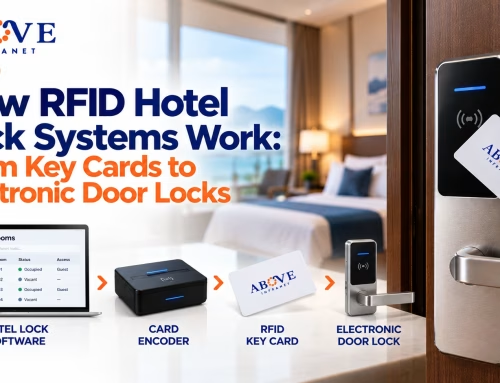
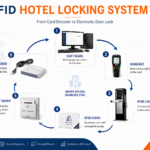
Room assignment → Lock management software → RFID card encoder → RFID key card → Electronic door lock
At check-in, hotel staff select the guest’s assigned room and access period. A compatible card encoder then prepares the RFID key card.
When the guest presents the card near the electronic lock reader, the lock checks whether the credential is valid for that room and time period.
With an electronic credential, the hotel can generally follow a structured replacement procedure.
Staff may:
Verify the guest’s identity.
Confirm the room assignment.
Prepare a replacement credential.
Follow the system procedure for the lost card.
Record the incident when necessary.
The exact procedure depends on the lock system being used.
This is one of the reasons hotels should review credential management, not only the physical lock.
How Does Mobile Access Change the Guest Experience?
Mobile access allows a compatible smartphone to function as a hotel room credential when the selected lock platform and software support it.
Instead of relying only on a physical key card, the guest may receive a digital hotel key through a supported mobile environment.
A possible mobile-access journey could include:
Reservation confirmation
Guest verification
Room assignment
Digital credential issuance
Smartphone-based room access
For some guests, this can reduce the need to carry another physical card.
However, hotels should not assume that mobile access automatically replaces RFID.
Mobile access requires more than a compatible lock
Depending on the platform, mobile access may require:
Compatible electronic locks
Supported digital credential technology
Hotel or guest mobile software
Guest verification procedures
Appropriate network infrastructure
Staff training
Troubleshooting procedures
A backup credential method
Requirements vary depending on the lock platform and hotel management software being used.
For this reason, hotels planning a digital hotel key in Cebu should treat mobile access as part of a broader technology project rather than simply another feature of the door lock.
Why Integrated Electronic Hotel Locksets Matter
A hotel access system becomes easier to manage when the lock, credentials, software, and staff procedures are planned together.
The surrounding system determines how the lock will be managed every day.
The importance of lock management software
A hotel lock management system provides authorized employees with a way to manage room and staff credentials.
Depending on the platform, staff may be able to:
Register rooms and locks
Prepare guest cards
Create staff credentials
Set access periods
Manage permission levels
Replace lost cards
Support lock configuration
Maintain access records
The software, RFID cards, encoder, and locks must be compatible.
For a larger hotel or resort, this becomes particularly important because room access may involve hundreds of guest and employee credentials.
Connecting hotel locks with hotel management software
Electronic locksets may also form part of a wider hotel technology environment.
Depending on system compatibility, this can involve:
Property Management Systems
Hotel management software
Reservation systems
Guest check-in
Room assignment
Access control
Network infrastructure
Security systems
Jinisys provides information about its KloudHotels Management System for managing hotel reservations, guest information, room operations, and front-desk workflows.
For properties in Cebu City and Metro Cebu, installation and after-sales support should be part of the system evaluation.
9. Future scalability
A hotel may start with RFID key cards and later consider:
Mobile access
Additional rooms
Common-area access
PMS integration
Expanded staff permissions
Energy management
Other smart hospitality systems
Planning for future requirements can help avoid replacing the entire access environment when the property expands.
Building a Connected Hotel Access Strategy in Cebu
A smarter hotel does not come from one electronic lock.
It comes from coordinating the systems that guests and employees rely on throughout the stay.
A connected hotel access strategy may combine:
RFID hotel locks + electronic locksets + credential management + mobile access + hotel software + network infrastructure + hotel security technology
Before investing in new equipment, hotel owners and IT managers should document the complete guest-access journey.
Ask:
How is the guest reservation received?
How is the room assigned?
How is the guest credential created?
How does the guest enter the room?
How are staff permissions assigned?
What happens when a card is lost?
How are room changes handled?
What happens if a lock or battery fails?
How does checkout end the guest’s access?
Which systems need to communicate with each other?
Answering these questions provides a stronger foundation than choosing an electronic lock based only on appearance or price.
Hotels in Cebu City considering modernization should evaluate RFID hotel locks, digital hotel keys, electronic hotel locksets, access management software, and hotel technology infrastructure together.
The objective is not simply to make the door smarter. It is to create a guest-access environment that is practical for visitors, manageable for employees, and appropriate for the property’s future requirements.
Frequently Asked Questions
What is an RFID hotel lock system?
An RFID hotel lock system uses compatible RFID cards as electronic credentials for guest rooms or controlled hotel areas. Hotel staff typically prepare the credential using lock management software and an RFID card encoder, while the electronic door lock verifies the card when it is presented.
Can hotels use both RFID cards and mobile keys?
Yes, when the selected lock system and software support both credential types. A hotel may offer mobile access while keeping RFID key cards available for guests who prefer or require a physical credential.
Are mobile hotel keys replacing RFID cards?
Not completely. Mobile credentials are an additional access option for some hotels, while RFID cards remain practical and familiar. The right approach depends on the property, guest profile, lock platform, software, and available infrastructure.
What happens if a guest loses an RFID hotel key card?
Hotel staff can generally verify the guest’s identity, confirm the assigned room, and prepare a replacement credential according to the lock system’s procedures. Hotels should establish a clear lost-card process before implementing the system.
Can electronic hotel locks integrate with hotel management software?
Some electronic lock platforms can integrate with compatible hotel management or PMS software. Compatibility depends on the exact lock model, encoder, software version, interface, and hotel system being used.
What should a hotel consider before replacing existing door locks?
Hotels should check existing door dimensions, room count, lock compatibility, guest and staff access requirements, network infrastructure, hotel software, credential procedures, maintenance requirements, and technical support.
Are smart hotel locks suitable for hotels and resorts in Cebu?
They can be suitable for hotels, resorts, inns, serviced accommodations, and other hospitality properties in Cebu. The appropriate system depends on the number of rooms, existing doors, guest-access requirements, current infrastructure, operational workflow, and maintenance capacity.
Planning a Hotel Access Upgrade in Cebu?
Hotels and resorts considering an access-control upgrade should first assess their:
Existing hotel door locks
Guest access requirements
RFID key card requirements
Mobile access plans
Staff permission levels
Hotel management software
Network infrastructure
Security requirements
Integration needs
Maintenance procedures
Above Infranet Solutions Inc. can help Cebu hospitality properties evaluate electronic hotel locksets, RFID access, hotel access control, and the infrastructure needed to support a more connected hotel environment.