How Hotel Lock Systems Can Improve Guest Access and Hotel Operations
A hotel room lock may seem like a small part of the guest experience, but it affects much more than opening and closing a door.
Every day, hotel staff deal with check-ins, room changes, lost key cards, housekeeping access, maintenance requests, late check-outs, and emergency situations. When room access is difficult to manage, these routine tasks can quickly become frustrating for both guests and employees.
A properly planned hotel lock system can help make room access more convenient while giving hotel teams better control over everyday operations.
The important part is choosing a system that fits the property’s actual workflow—not simply installing electronic locks because they are newer.
What Is a Hotel Lock System?
A hotel lock system is the combination of hardware and access-management tools used to control entry to guest rooms and other authorized areas.
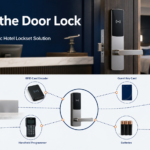
A typical electronic hotel lock setup may include:
Electronic door locks
RFID key cards
Card encoder
Hotel lock management software
Staff credentials
Emergency or override access
Programming or maintenance tools
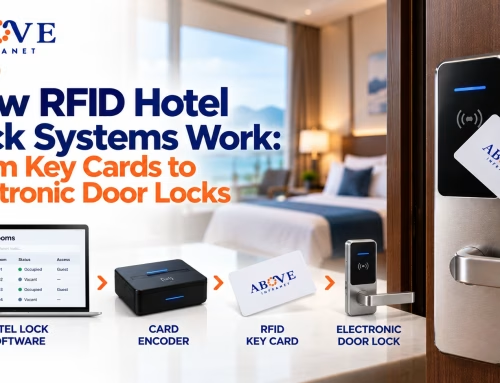
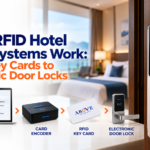
A basic RFID workflow may look like:
Hotel Lock Software → Card Encoder → RFID Key Card → Electronic Door Lock
When these components work together properly, the hotel can manage guest and staff access more efficiently than with traditional physical keys alone.
1. Faster and Simpler Guest Check-In
One of the most visible benefits of an electronic hotel lock system is a more straightforward check-in process.
At the front desk, staff can typically assign the guest’s room, set the access period, encode a card, and issue it during check-in.
Instead of searching for a physical room key, the process becomes:
Room Assignment → Encode Card → Give Card to Guest → Room Access
For properties handling many arrivals each day, reducing unnecessary steps can make the front desk easier to manage during peak periods.
This does not eliminate the need for good front desk procedures, but it gives staff a more structured way to issue room access.
2. Easier Room Access for Guests
RFID key cards are commonly used because guests can simply present the card near the reader instead of inserting and turning a traditional key.
This can be especially useful when guests are:
Carrying luggage
Traveling with children
Returning to their room at night
Staying in a large resort
Moving between rooms and common areas
The interaction should be simple: present the correct credential and enter.
A smooth room-entry experience may seem small, but guests interact with the door several times throughout their stay.
3. Lost Cards Are Easier to Handle Than Lost Physical Keys
Guests occasionally lose room keys.
With a traditional mechanical key, the hotel may need to consider whether someone else can still use that key and whether the lock needs to be rekeyed.
Electronic credentials give hotels more flexibility.
The exact implementation varies depending on the manufacturer and lock software.
This type of access management gives hotels more control than a traditional key that continues to work simply because someone still has it.
6. Staff Access Can Be Managed by Role
Hotel employees also need access to rooms and operational areas.
But a housekeeping employee, maintenance technician, supervisor, and hotel manager do not necessarily need the same access.
An electronic hotel lock system may support different credential permissions.
For example:
Housekeeping
Selected rooms or floors during working hours
Maintenance
Guest rooms and designated technical areas
Supervisors
Broader operational access
Management
Higher-level authorized access
The exact permission options depend on the selected system.
The objective should be simple: provide employees with the access they need to perform their responsibilities without giving unnecessary access.
7. Housekeeping Operations Can Become More Organized
Housekeeping teams move through many rooms each day.
Managing individual physical keys for every room can become inconvenient, particularly in larger hotels.
With properly configured staff credentials, housekeeping teams may be able to access their assigned areas using authorized staff cards.
This can reduce the number of physical keys that need to be managed manually.
Hotels should still maintain clear policies for:
Staff card issuance
Card return
Lost staff credentials
Access permissions
Shift changes
Technology works best when it is supported by proper operating procedures.
8. Maintenance Teams Can Respond More Efficiently
Maintenance personnel may need access to guest rooms when resolving issues such as:
Air-conditioning problems
Plumbing concerns
Electrical faults
Television or internet issues
Door hardware problems
An electronic access system can allow the hotel to give maintenance staff appropriate credentials without relying on a large collection of physical room keys.
Again, permissions should be carefully configured based on the hotel’s actual requirements.
9. Better Control During Check-Out
When the guest’s stay ends, the hotel needs a clear transition between one occupant and the next.
Electronic credentials can help by using defined access validity rather than relying entirely on guests returning physical keys.
The hotel can then issue a new credential for the next guest.
This does not mean hotels should ignore card collection and reuse procedures. RFID cards still need to be managed as physical inventory.
But access validity can provide another layer of operational control.
10. It Can Reduce Dependence on Traditional Master Keys
Mechanical master keys can be useful, but losing one may create a significant security concern.
Electronic hotel lock systems can provide more structured staff access through programmable credentials.
Hotels still need emergency and override procedures, but electronic access can reduce the need to distribute traditional master keys widely.
The goal is not to remove every mechanical backup method.
It is to manage powerful credentials more carefully.
11. Access Records May Help With Operational Review
Some electronic lock platforms can provide access-related records or audit information.
Depending on the system, this may help hotel management review certain room-access events.
This can be useful when investigating operational questions.
However, hotels should check exactly:
What events the lock records
How records are retrieved
How long information is stored
Which credentials can be identified
Whether records are stored locally or centrally
Audit capabilities vary considerably between systems, so they should not be assumed.
12. Integration Can Reduce Duplicate Front Desk Work
Some hotel lock systems can connect with compatible Property Management Systems.
A possible workflow is:
PMS → Hotel Lock Software → Card Encoder → RFID Key Card → Electronic Lock
When properly supported, integration may allow room and stay information to move more efficiently between hotel systems.
This can reduce unnecessary duplicate data entry.
However, integration needs to be verified before installation.
Compatible platforms may support mobile credentials that allow guests to use a smartphone for room access.
A system might eventually support:
RFID Card → Electronic Door Lock
and
Mobile Credential → Electronic Door Lock
Mobile access can be convenient, but it may require additional software, network services, integrations, or compatible lock hardware.
Hotels should evaluate whether mobile access actually fits their guest experience before investing in it.
14. Hotel Operations Become Easier to Scale
Managing access for 10 rooms is very different from managing it for 100 or 300 rooms.
As properties grow, they may need to manage:
More guest credentials
More housekeeping personnel
More maintenance staff
Multiple floors
Additional buildings
Several front desk stations
Different access areas
A properly designed electronic lock environment can make this growth easier to manage.
Scalability should therefore be considered before installation, particularly for properties planning future expansion.
15. Electronic Locks Still Require Maintenance
A hotel should not assume that electronic locks eliminate maintenance.
They simply change some of the maintenance requirements.
Hotels may need to monitor:
Battery levels
Door alignment
Handles and mortises
RFID cards
Card encoders
Programming devices
Lock software
Replacement hardware
Battery-powered locks should have a preventive maintenance schedule.
Waiting until a guest cannot enter a room is not a good maintenance strategy.
16. Emergency Access Still Matters
Every electronic lock deployment needs a fallback procedure.
Depending on the lock system, emergency access may involve:
Mechanical override keys
Emergency cards
Programming devices
Administrator procedures
Hotels should know what happens if:
A card cannot be read
A battery is depleted
The card encoder stops working
The front desk computer becomes unavailable
Lock software cannot be accessed
These scenarios should be considered before the property goes live with the system.
Hotel Lock Systems and the Guest Experience
Guests may never think about the technology behind their room door when everything works properly.
That is usually a good sign.
A well-planned system should make access feel simple:
Check In → Receive Credential → Open Room → Enjoy Stay
The technology should support the experience rather than become an obstacle.
For hotel staff, however, there is much more happening behind that simple interaction.
The system needs to support:
Front Desk + Housekeeping + Maintenance + Security + Management
That is why hotel locks should be viewed as an operational system rather than just door hardware.
What Should Hotels Look for in a Lock System?
Before choosing a system, hotels should evaluate:
Compatibility with existing doors
RFID card and credential options
Ease of card encoding
Front desk workflow
Guest and staff permission management
Lost-card procedures
Battery maintenance
Emergency access
Replacement parts
Technical support
PMS compatibility
Mobile access options
Expansion capability
Price matters, but it should not be the only deciding factor.
A cheaper lock that creates operational problems may cost more over time than a system that is properly designed for the property.
Frequently Asked Questions
Do hotel electronic locks require internet access?
Not necessarily. Many RFID hotel locks can validate credentials locally at the door. Cloud management, mobile credentials, monitoring, or certain integrations may require connectivity depending on the system.
Can hotels continue using RFID key cards?
Yes. RFID cards remain a practical access method for many hotels and resorts because they are familiar to guests and manageable for front desk teams.
Can hotel locks integrate with a PMS?
Some electronic lock systems can integrate with compatible Property Management Systems. Compatibility, integration method, and supported functions should always be confirmed before purchasing.
Are electronic hotel locks suitable for small hotels?
They can be. The decision depends on the number of rooms, operating workflow, budget, maintenance capability, and access requirements.
What happens when a guest loses an RFID card?
Hotels can generally issue a replacement credential. How the previous card is invalidated depends on the specific lock system.
Do electronic hotel locks need regular maintenance?
Yes. Batteries, physical lock hardware, door alignment, card encoders, software, and replacement parts should all be included in a maintenance plan.
Final Thoughts
A good hotel lock system does more than unlock guest rooms.
When properly planned, it can support a smoother guest journey while helping hotel teams manage check-ins, room changes, staff access, lost credentials, maintenance, and future expansion more efficiently.
The key is to look at the complete environment:
Guest Access + Electronic Locks + RFID Credentials + Front Desk Workflow + Staff Permissions + Maintenance + Hotel Systems
When those pieces are planned together, the lock system becomes part of a more organized hotel operation rather than simply another piece of hardware.
For more information on how Above Infranet Solutions Inc can help you with hotel lock systems for better guest access and hotel operations, please contact us at [0917 715 4189 (line 9177154189)](tel:09177154189), or visit us here: